
Grower Support
Portobello mushroom growing kit preparation guide
Before a portobello mushroom growing kit reaches your site, settle the instructions, receiving checks and responsibilities. This guide helps a business buyer ask concrete questions; it is not a substitute for the supplier's strain-specific cultivation protocol.
A successful handover starts in the inquiry.
Imagine a grower ordering kits for a demonstration program. The purchase team knows the audience and date, but the first brief does not identify the substrate, maturity stage or available holding space. Before seeking quotations, the team records the intended use, number of kits, destination and staff responsible for receiving them.
The supplier is asked to identify included materials, substrate colonization stage, handling instructions and the contact route for a batch concern. The review result is a clearer specification with unresolved questions marked. This is a procurement scenario, not a report of a customer harvest or a verified supplier service.
Do not borrow settings from an oyster or shiitake kit for a portobello request. Species, strain and process differences need explicit confirmation. Exact temperature in °C or °F, relative humidity, moisture basis and holding period should be stated by the supplier for the offered item and checked against the site plan.
“Which step is included, and which step belongs to our grower?”
A question to put in the purchase brief, not a customer testimonial
Work through the handover questions
Before selecting a kit format
Compare a prepared substrate kit with a kit requiring additional preparation. A prepared format may reduce initial setup steps, while a less prepared format can give the grower more process control but require suitable equipment and skills. Ask for the included components and excluded tasks rather than assuming that “complete” describes the same scope across suppliers.
Before confirming seasonal timing
Explain when the room, receiving staff and storage space will be available. Request a dispatch basis and transport handling plan tied to the actual batch. A calendar target does not establish shelf life or suitability for a route. Ask what happens if arrival changes, including who authorizes a revised shipping method.
Before accepting an alternative
Keep species identity and essential handling requirements fixed. Compare substrate composition, net mass, container dimensions, filter or closure design, instructions and support scope. Premium, mid-range and budget-friendly supplier preferences can guide packaging and service discussions, but they are buyer choices rather than independent ratings.
At receiving and during a pilot
Record batch details, arrival date, package integrity and conditions against the agreed inspection plan. Photograph any concern before changing the material and ask the supplier for the next step. Keep observations from a pilot separate from purchase claims. Outcomes depend on the exact material, handling and grow environment.
Build a practical receiving record
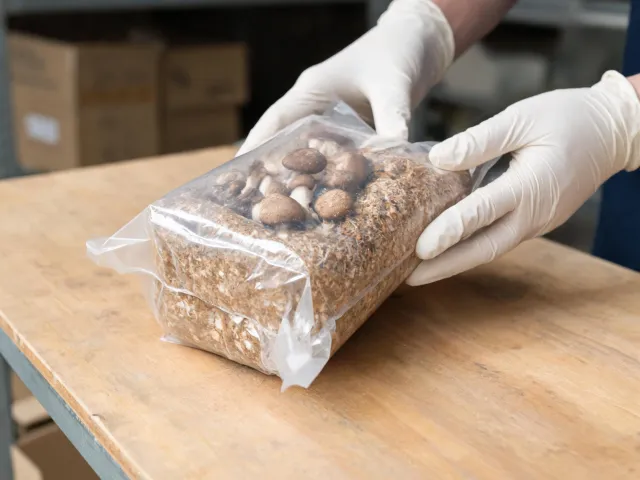


These illustrations show the intended review process, not a supplier facility. For requirement vocabulary consult the Penn State Extension reference. Ask a suitably qualified local adviser about site-specific cultivation and destination requirements; a local service network is not represented on this site.
See growing-kit inquiry optionsBring your open questions into the request.
Add the species, carrier or substrate, quantity, US destination and seasonal delivery date. Tell us which instructions and local support responsibilities need clarification.